


AGRONOMIC RESOURCESTO SUPPORT EVERY SEASON
YOU CAN TAKETO THE FIELD
What Defines High Quality Corn Silage?
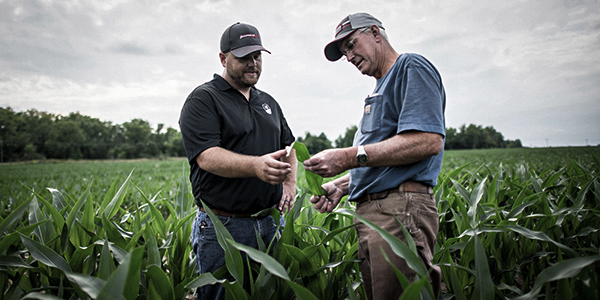
High-quality corn silage is the cornerstone of herd performance, feed efficiency, and profitability. But it can’t be captured by a single lab metric. Silage quality results from hybrid selection, in-season management, harvest execution, and proper storage, all tuned to your farm’s environment and feeding goals.At LG Seeds, our Silage Proven lineup is tested locally and regionally to deliver the consistency livestock operations depend on, tonnage, starch, and fiber digestibility that translate to real performance in the bunk and the barn.
Hybrid Selection: The Starting Point of Silage Quality
Silage quality begins with choosing the right hybrid. Genetics provide the base; management preserves the value.
LG Seeds offers silage products across a range of maturities (80–120 RM), helping growers match products to growing conditions, harvest timing, and feed strategies. Many products also offer dual-purpose flexibility, delivering strong results whether harvested as silage or grain.
Selecting the right hybrid sets up everything that follows.
In-Season Management: Setting Up Quality Before Harvest
Silage potential is shaped long before the chopper enters the field. Growing-season conditions and management influence fiber quality, starch accumulation, and plant health.
Influencing factors include:
- Seasonal rainfall and temperature, which affect lignin formation and starch accumulation.
- Disease pressure, which can trigger premature plant shutdown and create uneven moisture.
- Fertility and population management, which impact plant size, fiber composition, and tonnage.
Healthy plants support better fiber integrity, more consistent kernel fill, and improved digestibility.
“Starch levels and starch digestibility are equally important drivers of high-quality silage.” — Samantha Benedetto, LG Seeds Agronomist
Harvest: Where Digestibility and Feed Value Are Finalized
Kernel Processing & Particle Size
Kernel processing and particle size directly influence starch digestibility and feed efficiency.
- Kernel processing score reflects how well kernels are cracked for rumen access and strongly correlates with milk yield and feed conversion.
- Particle size distribution impacts rumen function—too coarse limits intake, too fine hinders rumen health.
Proper harvester settings, processor clearance, and chop length determine how efficiently feed can be digested.
Even small adjustments at harvest can make a measurable difference in performance.
Harvest Moisture
Harvesting at 65–70% whole-plant moisture supports optimal fermentation and storage stability.
Storage & Feedout: Preserving the Value You Built
Proper storage protects dry matter, minimizes spoilage, and maintains digestibility.
Key priorities:
- Packing and sealing quickly to exclude oxygen
- Monitoring stability throughout storage
- Managing face removal to limit losses
High-quality silage is the product of managing each step from hybrid to feedout, not any single action.
Silage Proven: Reliable Nutrition, Season After Season
LG Seeds products are validated through agronomic and nutritional testing for consistent feed quality across environments.
LG Seeds Silage Proven Targets Include:
- Fiber digestibility supported by low lignin (2–5%)
- Strong starch content (~40%)
- Reliable standability for flexible harvest
- Testing across 70+ research and commercial plots
Whether your goal is high tonnage, improved digestibility, or dual-purpose flexibility, Silage Proven hybrids deliver dependable results from seed to feed.
Ready to Strengthen Your Silage Plan?
Building a high-quality silage system starts with the right hybrid. Explore the LG Seeds corn silage hybrid lineup and connect with your LG Seeds agronomist to develop a hybrid and management plan that supports your herd’s nutrition and your farm’s bottom line.
Glossary: Key Forage Quality Terms
- NDF (Neutral Detergent Fiber): Total fiber content (cellulose, hemicellulose, lignin); higher NDF means lower intake.
- ADF (Acid Detergent Fiber): Less digestible fiber (cellulose + lignin); lower ADF = more energy.
- Lignin: Indigestible fiber component; lower lignin improves digestibility.
- IVDMD / NDFD: In-vitro digestibility measurements.
- In situ / In vivo: Animal-based digestibility tests.
- NIRS: Rapid analysis via near-infrared spectroscopy.
- TDN: Total digestible nutrients; estimates energy contribution.
- NE (NEm, NEg, NEL): Net energy for maintenance, gain, and lactation.
Learn more about our silage offerings here