





AGRONOMIC RESOURCESTO SUPPORT EVERY SEASON
YOU CAN TAKETO THE FIELD

Slugs
Spring is upon us and another growing season is under way. As you begin planting this year’s crop, it is important to start looking for possible pests that could jeopardize your yields. One potential threat that you can look for early on is slugs.
 Slugs are soft-bodied, slimy, legless creatures. They are a gastropod that can be a mix of gray, black, or white in color. They can range in size, however in the Midwest they are typically between ½- 1½ inches in length. Some slugs can overwinter, but most generate from eggs laid the previous fall.
Although, slugs are most active at night, it is possible to spot them during the day when there is heavy cloud cover or high humidity levels. Slugs like very moist environments with a lot of cover. When scouting for slugs you are most likely to find them hiding in the soil under clods or debris. Fields with 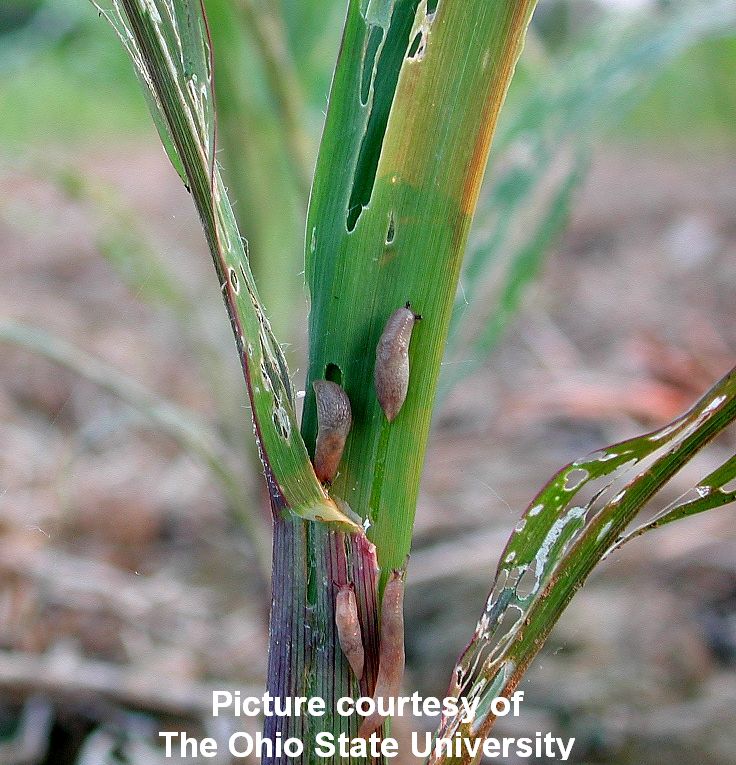 heavy residue or zero tillage are most likely to be jeopardized by slugs.
The best time to scout for slugs is when crops are in an early vegetative stage between April and June. Damage from slugs is most likely to occur at the time of planting when seed slots aren’t properly covered. Rather than having to wait until ideal conditions to feed, they are able to feed all day and night. As the plant begins to grow slugs like feeding on softer leaf tissue. They typically feed on the lower part of the plant which can leave scars or tattered leaves. A high infested area can sometimes resemble damage from a hailstorm or that of a feeding area of the corn flea beetle. When scouting for slugs, look for slime trails on the leaves or the ground near damaged leaves. Although, it depends on the severity of the damaged area, most of the time the crop will survive.
There are a variety of control options to help lessen or prevent the impact slugs can.jpg?sfvrsn=221d93bb_0 "Slugs 3") have on your crop.
have on your crop.
- Plant early before slug eggs hatch. This should only be considered if soil conditions are fit.
- Reduce your crop residue on the entire field or in heavier debris areas.
- At planting make sure to sweep debris away from your seed furrow. This will keep the slugs at bay and make it difficult for them to get to the plant.
- Cover the ground with some type of abrasive surface. Lime source is one of the most common for field crops.
- Pelleted bait stations are a good option for smaller areas. Due to their higher cost, this would not be a cost-effective option for a larger area.
- Allow predators to naturally thin out the number of slugs.
- NOTE: Slugs are not insects. This means insecticides, Bt traits, and seed treatments will not defend your crop from slugs.
If there are additional concerns on slugs or other agronomy questions, please contact your local Technical Team Agronomist. Be safe this growing season and thank you for choosing LG Seeds.
Sources and Additional Information
- https://agcrops.osu.edu/newsletter/corn-newsletter/2018-14/season-slugs
- https://extension.entm.purdue.edu/fieldcropsipm/insects/soybean-slugs.php
- https://extension.entm.purdue.edu/fieldcropsipm/insects/corn-slugs.php
- http://bulletin.ipm.illinois.edu/?p=4103
- https://crops.extension.iastate.edu/cropnews/2013/05/slugs-wet-weather
- https://ento.psu.edu/extension/factsheets/slugs-as-pests-of-field-crops



Technical Team Agronomist