





AGRONOMIC RESOURCESTO SUPPORT EVERY SEASON
YOU CAN TAKETO THE FIELD
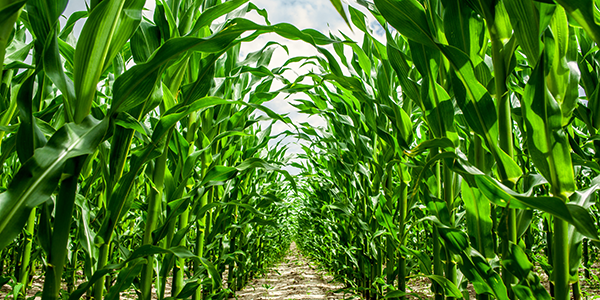
Early Steps Can Pave the Way for a Big Corn Crop
Early-season management sets the tone for corn yield potential long before tasseling. While Mother Nature plays her part, strategic agronomic choices around equipment prep, inputs, weed control and nutrient timing can make a measurable difference in stand strength and season-long performance.
LG Seeds agronomist Landon Taylor, based in the Mid-South, shares key insights on building strong corn stands and protecting early yield potential.
Tip #1: Prep Your Planter – It Pays
Taylor calls the planter the most important piece of equipment on the farm, and with good reason. He says if farmers don’t get the seed in the ground at the correct depth and spacing, they’ll be up against it all season.
Planter Prep Checklist
- Calibrate meters before every planting season.
- Verify down pressure and closing wheel settings for consistent seed-to-soil contact.
- Maintain uniform planting depth and spacing for even emergence.
- Replace worn discs, bearings, and chains before they cause skips or doubles.
Tip #2: Explore Additional Inputs
Biologicals and starter fertilizers continue to gain ground as tools for improving early vigor, soil health, and nutrient efficiency. They can be especially valuable in conservation tillage or cooler, residue-heavy systems where early nutrient availability can lag.
As always, exploring additional inputs should complement, not replace, a sound fertility program. Start with solid agronomic data and scale what works. As you plan inputs for the upcoming season, work with your LG Seeds agronomist to figure out what makes the most sense for your operation.
- Biologicals: More biological products are available on the market and research is improving. Different types of biologicals can provide a variety of benefits and uses. Consider biologicals to help enhance nutrient uptake, boost early vigor and improve soil structure. Start small, validate results, and expand if you see a proven ROI.
- Starter Fertilizers: While not always a direct yield-booster, starter fertilizers can help improve nutrient update and promote early growth. A no till or reduced till field would likely see more of a benefit.
Micronutrient Focus: Micronutrients are essential to crop growth and development. They are required in small quantities and it's rare they are limited, but can have implications if they are. Tissue testing can help if deficiency is expected.
Tip #3: Stay Ahead of Weeds and Disease
A clean, healthy start sets the foundation for high yields. Plan ahead this season for both herbicide and fungicide applications to set your fields up for success. These plans should include product selection, application timing and equipment readiness, so you can be prepared before crop stress begins.
Weed Management Strategies
“Start clean and stay clean” should be the motto for early weed control. Heavy weed growth can limit young plants. Follow these strategies to help start and stay clean this season.
- Use pre-emergence herbicides with residual activity.
- Follow up with timely post-emergence passes before canopy closure.
- Rotate multiple modes of action to delay resistance and sustain control.
Fungicide Readiness
Be prepared to apply fungicide when disease pressure rises. Key diseases like tar spot, northern corn leaf blight, gray leaf spot, and southern rust can strike fast.
Seek fungicides with multiple modes of action and consider the product’s efficacy on the disease(s) you’re combatting.
Tip #4: Optimize Nutrient Use Through Timely Application
Nitrogen is one of the most yield-critical nutrients for corn and applying it at the right time can dramatically improve efficiency and return on investment.
Timing Is Key
Corn’s nitrogen uptake accelerates rapidly between V6 and V8, when roots expand and nutrient demand peaks.
According to Kansas State University Research and Extension, “Timing nutrient applications to match this uptake enhances the potential for greater nutrient use efficiency, particularly for mobile nutrients such as nitrogen.”
Taylor recommends applying nitrogen as close to when the corn will take up the nutrient to improve nutrient use efficiency and minimize nitrogen loss due to denitrification or leaching. Some farmers may consider split applications with a sidedress application later in the season – before the V8 growth stage if a portion of nitrogen was supplied pre-plant or as a starter fertilizer application. The benefit of this application timing is that it allows for adjustment to be made based on spring weather conditions and provides the crop with the nitrogen supply it needs at a very critical time.
On the other hand, depending too much on sidedress can be risky if weather conditions are not conducive to an application. Considering factors like weather, crop development, and cost are crucial components when it comes to prioritizing needs and ultimately managing risk.
Conclusion: Get Ahead Early and Stay Strong
Early-season agronomy decisions set the foundation for yield potential. Every management step, from nutrient timing to weed control and planter prep, compounds to build a healthier, more resilient crop.
Key Takeaways:
- Prioritize planter setup for consistent stands and emergence.
- Evaluate biologicals and starter fertilizers based on ROI and local fit.
- Maintain clean fields and prepare for fungicide protection ahead of disease pressure.
- Aim to time nitrogen applications close to crop uptake to improve nutrient use efficiency.
For more field-tested agronomic advice, explore LG Seeds corn hybrids for early vigor or connect with your local LG Seeds agronomist for tailored recommendations.



Agronomy Team